

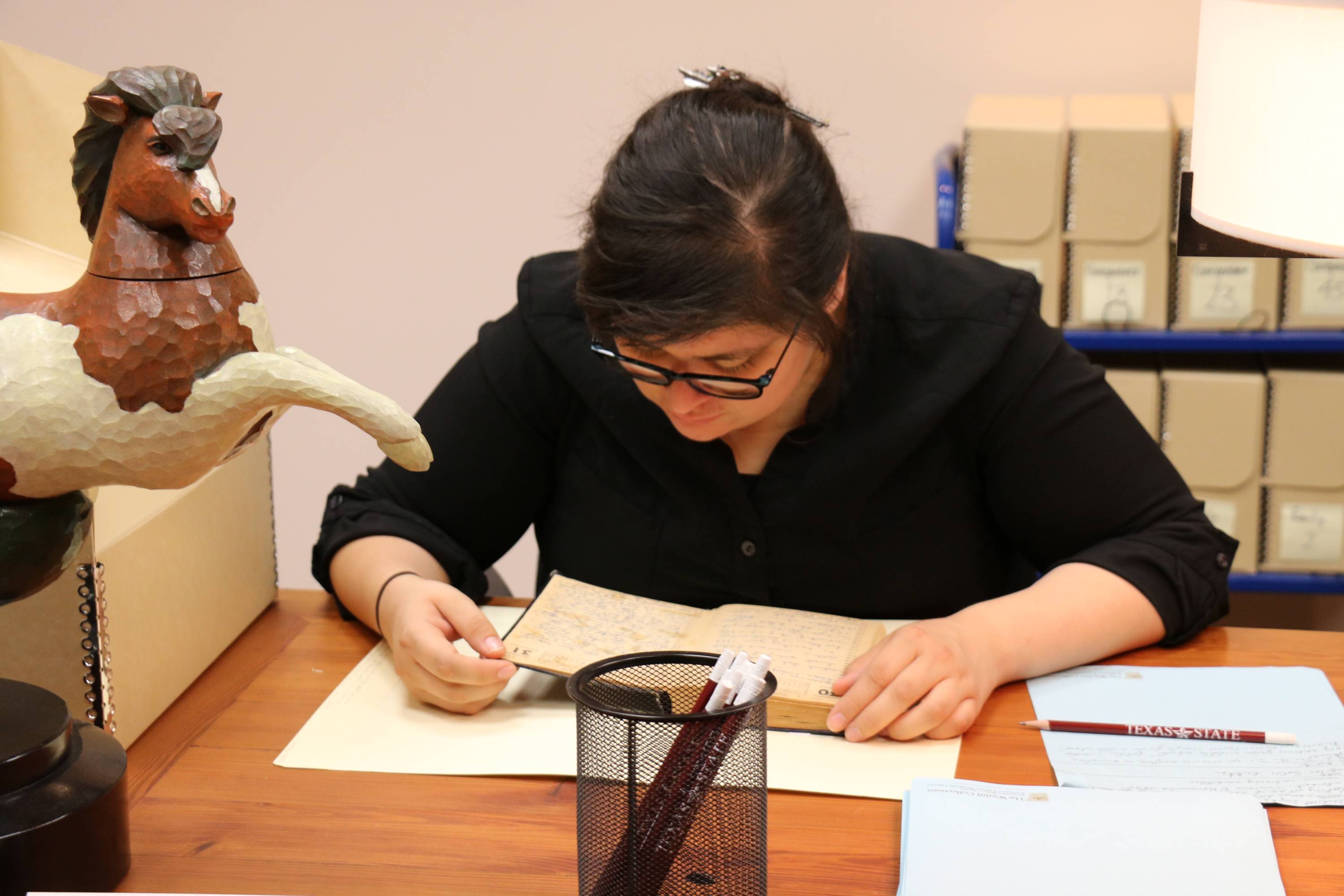
The archival collections at The Wittliff support original research, not only in literature, photography, music, and film, but also in broader scholarly disciplines such as history and various social sciences. To help facilitate connections between students, faculty, and Wittliff resources, we’ve compiled a list of calls for papers for academic conferences, edited volumes, and journal issues. These opportunities offer a way to publish, connect with peers, and contribute to the broader scholarly conversation in your field. After each call, we've offered some linked collections as starting points for exploring the topics, but the possibilities are endless! If you have any questions or need research assistance, please contact Lead Archivist, Katie Salzmann, or use our research assistance form.
Full project descriptions are available by clicking on the links
The Cormac McCarthy Journal
Articles | Submission deadline: open
The Cormac McCarthy Journal welcomes article-length manuscripts, no longer than 9,000 words, on themes and issues pertinent to the writings and literary environment of Cormac McCarthy.
Select Wittliff resources: Cormac McCarthy Papers (plus many ancillary collections)
American Gothic Studies Journal
Articles | Submission deadline: open
The Society for the Study of the American Gothic (SSAG) was established in 2023 to promote and advance the study of the American Gothic through research, teaching, and publication. It is the goal of the Society to strengthen relations among persons and institutions both in the United States and internationally who are undertaking such studies, and to broaden knowledge among the general public about the American Gothic in its many forms.
Select Wittliff resources: Joe Lansdale Papers | Cormac McCarthy Papers
Music and Mind
Book chapter | Submission deadline: December 31, 2025
Music affects the mind in ways that have long fascinated philosophers. This philosophical interest in music's affective qualities stretches from ancient Greece and the Cult of Asclepius, to the enlightenment ethics of Spinoza, to the modern thought of Schopenhauer. As a non-representational art form, music resists the kind of semiological and mimetic analysis in which scholars and audiences typically approach the plastic arts and literature. Instead, music seems to affect people in ways that are predominantly visceral and emotional, not analytical. Music's affective properties make it an especially interesting medium to explore human consciousness and experience. A call for chapters along the lines of Music and Mind may be approached interdisciplinarily.
Select Wittliff resources: Daniel Johnston Collection|
Recovering the US Hispanic Literary Heritage
Conference Paper | Submission deadline: January 12, 2026
The Recovering the US Hispanic Literary Heritage Program and the Association for Documentary Editing invite proposals for a joint conference to be held October 8-10, 2026 in Houston, Texas. This first-ever collaboration will bring together scholars, archivists, editors, students and community practitioners to explore how figures and documents—canonical, forgotten, official and grassroots—have shaped the histories, literatures and identities of the United States. The conference theme, “Record Keepers of Nation: Diverse Foundational Figures and Documents of the US”, highlights the intersection, conflicts and compromises of people, papers, voices, archives and biographies of first nations, natives, settlers, immigrants and exiles that have forged collective memory and national narratives. The conference will emphasize recovery, preservation and dissemination of the historical records of various communities that expand and unsettle our understanding of the nation’s foundation.
Captivating Criminality 13: Crime Fiction, Conflict, and Representation
Conference | Submission deadline: January 15, 2026
Papers presented at Captivating Criminality 13 are invited to examine any forms of conflict and representation and their relation to crime fiction in any form and in any medium, drawing on the multiple threads that have fed into the genre since its inception in all parts of the world. Speakers are invited to explore the crossing of forms and themes within crime fiction to discuss how crime fiction challenges, discusses, or upholds concepts of normalcy that underlie representation and conflict(s). The aim of this conference is to show crime fiction’s engagement with conflict and representation in its multifacetedness, ranging from the domestic and personal (e.g. in domestic noir) to the international and global political (e.g. in eco thrillers or crimate fiction). Papers may deal with both or either concept and are not limited by media, time, or place, or scholarly approach; all scholarship on crime fiction is welcome.
Select Wittliff resources: James Crumley Papers | Jesse Sublett Papers | Rick Riordan Papers (Tres Navarre)
Comics Arts Conference San Diego
Papers | Submission deadline: February 7, 2026
The Comics Arts Conference is now accepting 100 to 200 word abstracts for papers, presentations, and panels taking a critical or historical perspective on comics (juxtaposed images in sequence) for a meeting of scholars and professionals at Comic-Con International, in San Diego, CA, July 23–26, 2026. They seek proposals from a broad range of disciplinary and theoretical perspectives and welcome the participation of academic and independent scholars. They also encourage the involvement of professionals from all areas of the comics industry, including creators, editors, publishers, retailers, distributors, and journalists.
Select Wittliff resources: Jack Jackson Collection | Joe Lansdale Papers | Comix Collection
Special Issue of Christianity and Literature: Climate Fiction and Christianity
Essays | Submission deadline: July 1, 2026
This issue aims to publish essays on climate fiction and its related topics that are approached through the lens of Christian theological and literary interpretation. Climate fiction, or “Cli-Fi,” has boomed as genre of fiction in the last decade or so, with scores of novels produced, and in response, a burgeoning body of literary criticism as well. Imaginative and thought-provoking, these novels at times create a future post-apocalyptic world. At other times they elucidate matters in our present day that contribute to climate change, or they might even look to the past to examine historical forces and causes. Well-known authors such as Cormac McCarthy, Ian McEwan, Margaret Atwood, Barbara Kingsolver, Amitav Ghosh, and Kim Stanley Robinson have written climate fiction, as have a wide number of other emerging authors.
Select Wittliff resources: Cormac McCarthy Papers
“Living in a Material World”: The 1980s in Popular Culture
Symposium | Submission deadline: July 31, 2026
PopCRN (the Popular Culture Network) will be holding a free virtual symposium exploring the 1980s in popular culture to be held 26-27 November 2026. The 1980s was the decade of excess, technological innovation, and political upheaval. This conference aims to explore both the popular culture of the 1980s and how the 1980s have been depicted in the popular culture of other eras. We welcome papers from researchers across the academic spectrum and encourage submissions from postgraduate and early career researchers. We also welcome submissions for papers, panels and round tables. Papers from this conference will have the opportunity to be published in an edited book.
Select Wittliff resources: Selena Research Collection | Ramón Hernández Tejano Music Collection | Lonesome Dove (television miniseries) | Willie Nelson Papers (Farm Aid) | Bill Broyles Papers (China Beach) | Texas Monthly Editorial Records
- Facebook
- Twitter
- Instagram
- Youtube
Email List